The Hackett Signature Editions Collection Featuring Premium Hardcovers of Hackett Classics - Learn More Here.

British Literature
-
![]() Doctor Faustus
Doctor FaustusThis new edition of Christopher Marlowe’s Doctor Faustus offers the complete 1604 A-text with embedded selections from the 1616 B-text. Its innovative format will make it easier for readers to note differences between these texts and to consider what is gained and lost in viewing them both separately and together. A full Introduction to the play, notes, and a rich selection of related texts further enhance the value of this edition to students of Renaissance drama, Reformation theology, magic, and occult philosophy.
Learn More -
![]() The Tragedy of Macbeth
The Tragedy of MacbethThe fourth in a series of editions of Shakespeare’s most political and history-soaked plays, this Macbeth offers copious aids to understanding the play not found in any other edition. By attending to the play’s medieval Scottish setting in a way that rival editors have never matched—when they have even dug beyond the early seventeenth-century context in which it was produced—Jan H. Blits’s edition richly rewards readers left unsatisfied by “decodings” of the play’s supposed allusions to the politics of early modern England who wish to look deeper. In doing so, it opens the text for readers to encounter, in new ways, the play’s historical, political, and psychological significance.
Learn More -
![]() The Tempest
The Tempest"Kittredge's landmark edition appears now with an insightful and informative introduction to the play, its background and its history on stage and screen, together with excellent suggestions for reading it with performance in mind and commentary on significant productions. I recommend it warmly to readers who are already familiar with the play, as well as to those approaching it for the first time." —Russell Jackson, Professor Emeritus of Drama, University of Birmingham
“An inspired edition of Shakespeare's late masterpiece, larded with riches that are at once accessible and challenging to students of The Tempest. These riches include a masterful introduction that sets forth major and minor characters in all their complexity; great page-for-page textual and performance notes that aptly explain the play’s obscurities and showcase the many ways given scenes and speeches have been performed; an enlightening guide to the reading experience—"How to Read the Play as Performance;" and brilliant questions for thought and discussion. Mahon and Mucciolo are the perfect guides through this most wondrous and perplexing play. —Laury Magnus, Professor of Humanities, U.S. Merchant Marine Academy
Learn More -
![]() Timon of Athens
Timon of Athens"Timon of Athens is one of the most enigmatic and underappreciated of Shakespeare's plays, yet its urgency for our times is not to be understated. Guided by Douglas Lanier's astute and accessible commentary throughout, this edition positions Timon in a range of historical, theoretical, and performance contexts. The superb Introduction and supplementary resources help the reader navigate key issues—ranging from money, friendship, and cynicism to art, ethics, and collaborative authorship—as well as consider contemporary adaptations on stage and screen. This edition will be a welcome resource for teachers and students at both undergraduate and graduate levels." —Jay Zysk, Department of English, University of Massachusetts Dartmouth
"Douglas Lanier's Introduction immerses us in the play's daring experiments with genre, its ethical and economic dilemmas, and its emotional and tonal range. He shows how Timon of Athens not only resonates with our troubled cultural moment but also speaks eloquently of its own times. His essay on appreciating the play as a performance script advises us expertly on how to read it as directors do and how to be alert to its radical openness to interpretation." —Stephen M. Buhler, Department of English, University of Nebraska–Lincoln
Learn More -
![]() Cymbeline
Cymbeline"The New Kittredge series is both a delight and a steal. Kittredge's textual authority, updated by eminent scholars sensitive to classroom needs and alert to staging choices, is once again available in these slim, elegant, inexpensive, user-friendly volumes. With lucid notes and incisive introductions geared especially to popular film versions, the series also offers an overview of both stage and film performances of each play. A must for any Shakespeare class."
Learn More
—Laury Magnus, Contributing Editor, New Kittredge Shakespeare and Hamletworks.org -
![]() King Henry the Sixth: Parts I, II, and III
King Henry the Sixth: Parts I, II, and IIIGeorge Lyman Kittredge's insightful editions of Shakespeare have endured in part because of his eclecticism, his diversity of interests, and his wide-ranging accomplishments—all of which are reflected in the valuable notes in each volume. The plays in the New Kittredge Shakespeare series retain the original Kittredge notes and introductions, changed or augmented only when some modernization seems necessary. These new editions also include introductory essays by contemporary editors, notes on the plays as they have been performed on stage and film, and additional student materials.
Learn More -
![]() The Merry Wives of Windsor
The Merry Wives of WindsorGeorge Lyman Kittredge's insightful editions of Shakespeare have endured in part because of his eclecticism, his diversity of interests, and his wide-ranging accomplishments—all of which are reflected in the valuable notes in each volume. The plays in the New Kittredge Shakespeare series retain the original Kittredge notes and introductions, changed or augmented only when some modernization seems necessary. These new editions also include introductory essays by contemporary editors, notes on the plays as they have been performed on stage and film, and additional student materials.
Learn More -
![]() King John & Henry VIII
King John & Henry VIII"This is a terrific edition that really brings King John and Henry VIII to life. Consistently inviting student participation, the edition makes the plays wonderfully accessible, through explanations of the language, descriptions of context, topic guides, plot outlines, illustrations, and genealogies. A particular strength is the emphasis on performance. Thanks to the insightful histories provided, King John and Henry VIII are richly illuminated as stage and screen creations, allowing for genuinely imaginative engagement with these most fascinating Shakespearean dramas."
Learn More
—Ramona Wray, Reader in English at Queen's University, Belfast -
![]() Edward II
Edward II"This exciting new edition of Edward II is indeed reader friendly. Of particular distinction are the introductory sections which include a thorough account of Marlowe's biography, a fresh critical examination of the play, plus a bibliography for further reading; a wise consideration of the date and text; and extensive annotations, especially helpful to students who have difficulties with the language. Of special value to both students and scholars are the Related Texts that follow the text of the play: three sections of documentary evidence on historical sources; power and politics; and love, friendship, and homoeroticism—all vital to an understanding of the play. No previous edition of the play manages to encompass so much."
Learn More
—Robert A. Logan, University of Hartford -
![]() Le Morte D'Arthur
Le Morte D'Arthur"I've just finished reading Joseph Glaser's Le Morte D'Arthur. I'm very pleased with it: the introduction is helpful without becoming an extended essay, the suggested reading seems solid and diverse, and the index is VERY useful, even for someone who has read Malory before. At last, a reader can keep all the knights and ladies straight! A fine entry point to a grand text, and when I next have an occasion to teach a course involving chivalry, I'll plan to use this very affordable edition."
Learn More
—Craig Caldwell, Department of History, Appalachian State University -
![]() The Faerie Queene, Book One
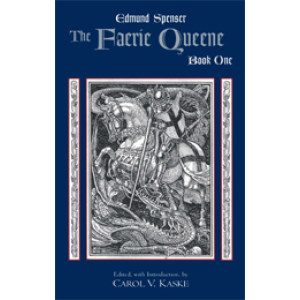
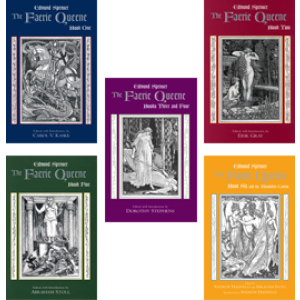
The Faerie Queene, Book OneFramed in Spenser's distinctive, opulent stanza and in some of the trappings of epic, Book One of Spenser's The Faerie Queene consists of a chivalric romance that has been made to a typical recipe—"fierce warres and faithfull loves"—but that has been Christianized in both overt and subtle ways. The physical and moral wanderings of the Redcrosse Knight dramatize his effort to find the proper proportion of human to divine contributions to salvation—a key issue between Protestants and Catholics. Fantastic elements like alien humans, humanoids, and monsters and their respective dwelling places are vividly described.
Learn More -
![]() Troilus and Criseyde in Modern Verse
Troilus and Criseyde in Modern VerseThis fast-moving Modern English version of Chaucer's greatest tragic romance highlights the poem's rapid shifts in register and diction as well as its subtle and elusive characterizations, while preserving the enchanting rhyme-royal stanza of the Middle English original. Christine Chism's Introduction illuminates the work's historical context, poetic devices, first audiences, sources, and non-traditional re-conception of a traditional female protagonist "whose faults," as Criseyde says, "are rolled on every tongue."
Learn More -
![]() The Two Gentlemen of Verona
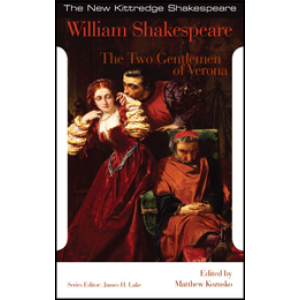
The Two Gentlemen of Verona"Even as the New Kittredge Shakespeare series glances back to George Lyman Kittredge's student editions of the plays, it is very much of our current moment: the slim editions are targeted largely at high school and first-year college students who are more versed in visual than in print culture. Not only are the texts of the plays accompanied by photographs or stills from various stage and cinema performances: the editorial contributions are performance-oriented, offering surveys of contemporary film interpretations, essays on the plays as performance pieces, and an annotated filmography. Traditional editorial issues (competing versions of the text, cruxes, editorial emendation history) are for the most part excluded; the editions focus instead on clarifying the text with an eye to performing it. There is no disputing the pedagogic usefulness of the New Kittredge Shakespeare's performance-oriented approach."
Learn More
—Studies in English Literature, Tudor and Stuart Drama -
![]() Titus Andronicus
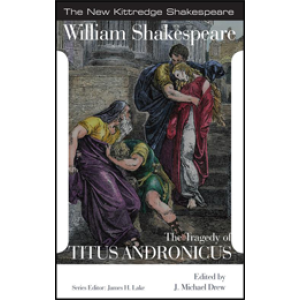
Titus Andronicus"J. Michael Drew's edition of Titus Andronicus in the New Kittredge Shakespeare series refreshes Kittredge's text with extensive and helpful explanatory notes as well as a thorough and enlightening introduction. A distinctive and attractive feature of Drew's edition is its generously illustrated focus on Julie Taymor's famous film adaptation. With its detailed and engaging questions for further study, this is an edition perfectly designed for classroom use."
Learn More
—Matthew Wikander, University of Toledo -
![]() The Winter's Tale
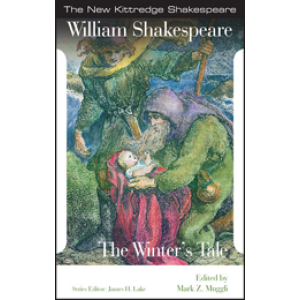
The Winter's Tale"The Winter's Tale is a kind of miracle play in which performance is of the essence of an exciting, imaginative, and inspiring plot embodied in visionary dialogue. In creating a course in Shakespeare Performed (2010) with his students staging an abridged Winter's Tale, Mark Muggli was in an ideal position to edit the play especially from the perspective of performance, as he did. This is a twenty-first-century edition up-to-date enough to include the Guthrie Theater's production of 2011 together with the solid twentieth-century scholarship of G. L. Kittredge. Kittredge's introduction, lightly edited, begins with Muggli's 'Spoiler Alert' about plot revelations the reader might prefer to experience first in the play itself. His notes are designed less to interpret than 'to facilitate the reader's interpretation,' and the reader and the play are primary in this presentation of The Winter’s Tale."
Learn More
—Tom Clayton, Regents Profesor, University of Minnesota -
![]() The First Part of King Henry the Sixth
The First Part of King Henry the Sixth"Michèle Willems's edition of The First Part of King Henry the Sixth offers valuable insights into this little-known and puzzling play. Like G. L. Kittredge, on whose work this edition is based, she sees it as mainly Shakespearean. The play we are shown here is no simple exaltation of patriotic feeling, but, more tellingly, a somber and incisive account of a kingdom staggering under the effects of the death of Chivalry. Willems astutely sees an interaction of the play's two main plots that are centered around Lord Talbot and Joan of Arc. She rightly underscores the overwhelming presence in the play of ambivalence, contradiction, irony, and multiple angles of vision. Her account of the play in performance tells a similarly disillusioning story in theatrical terms. Illustrations from performance history help bring to life this underrated and fascinating historical saga."
Learn More
—David Bevington, University of Chicago -
![]() Twelfth Night
Twelfth Night"Gayle Gaskill offers appropriate tribute to G.L. Kittredge by updating his classic edition with a mastery, thoroughness, and verve worthy of the original. This excellent edition is marked by impeccable scholarship that everywhere displays careful attention to detail and keen sensitivity to the needs of modern readers."
Learn More
—John W. Mahon, Senior Editor, The Shakespeare Newsletter, and Professor of English, Iona College -
![]() Medieval Drama
Medieval DramaThis reprint (with updated 'Suggestions for Further Reading') of the Houghton Mifflin edition makes David Bevington's classic anthology of medieval drama available again at an affordable price.
Learn More -
![]() King Richard II
King Richard II"An extraordinary artistic achievement, Richard II remains one of Shakespeare's most satisfyingly ambiguous plays and expertly-penned exercises in shifting audience sympathies. Pendleton's even-handed introduction and judicious supplements to Kittredge's annotations lay out the play's issues in a way that make its delightful poignancy even more available to readers. Especially useful are Pendleton’s extensive in-text performance notes, which recount how film versions deal with the challenges and possibilities the play presents."
Learn More
—James Wells, Muskingum University -
![]() All's Well That Ends Well
All's Well That Ends Well"Adding entirely new annotations to the text, providing a lucid overview of the play's production history, concluding with an instructive essay on a theatrical understanding of reading plays, and illustrated with suggestive film stills throughout, Kathleen Kalpin Smith's All's Well that Ends Well is a welcome edition to the New Kittredge Shakespeare series, richly setting the play in the context of stage and screen performance."
Learn More
—W. B. Worthen, Barnard College, Columbia University -
![]() Coriolanus
Coriolanus"Professor Jeffrey Kahan's expertise in the history of Shakespearean acting complements Kittredge's lucid [introduction and text] to create an edition of Coriolanus that centers modern readers in the play’s performance. Kahan's introduction to the edition both recounts historical performances and carefully details recent directorial choices—choices that reappear in the course of his footnotes providing acting choices for key scenes. These notes, together with photographs of compelling performances, fix the reader's imagination firmly in the midst of Shakespeare’s chilling theatrical portrayal of Republican Rome. This highly accessible edition will prove invaluable for actors, students, and lovers of Shakespeare."
Learn More
—Cyndia Clegg, Pepperdine University -
![]() Measure for Measure
Measure for Measure"This most problematic of Shakespeare's plays, a comedy filled with dark corners, has been beautifully presented by Laury Magnus and the late Bernice Kliman. Scholars will admire their editorial skill while students will benefit greatly from their ample notes, useful timeline of the play's plot, and cogent performance history. As the editors explain, the fiercely interlocked themes of the play—sex, money, justice, and religion—make this play a measure not only of Shakespeare's time but of our own."
Learn More
—Anthony DiMatteo, New York Institute of Technology -
![]() King Lear
King Lear"By adding comments on recorded performances to Kittredge's notes . . . [which] were fun and helpful to my early study of Shakespeare . . . Kenneth Sprague Rothwell gives students and researchers the means to explore how performance can elucidate 'the script' of King Lear."
Learn More
—Harry Keyishian, Fairleigh Dickinson University -
![]() King Richard the Third
King Richard the Third"In this splendid edition, Jacquelyn Kilpatrick gives us a comprehensive primer on Shakespeare's performance craft and an ideal text for teaching Richard III, particularly to students new to Shakespeare. Her introductory materials make a century of scholarship and filmmaking both accessible to the newcomer and illuminating for the experienced student or performer. Her keen understanding of the original performance circumstances of Shakespeare's plays and insightful accounts of salient stage and film productions work together to open up the rich array of possibilities and choices in performance, both then and now."
Learn More
—Catherine S. Burriss, California State University, Channel Islands -
![]() Sir Gawain and the Green Knight
Sir Gawain and the Green Knight“A dazzling recreation of the most memorable Middle English poem, and one that captures the original alliterative verse in all its dimensions: sense, sound, and rhythm.”—Ad Putter, Professor of Medieval English Literature, University of Bristol
"Nicely fills the gap between overly technical scholarly editions and too-simplified student editions. The translation and overview provide a solid introduction to the Middle English masterpiece and assures that future readers will be as willing as Glaser has been to devote the time and energy necessary to explore the poem's many facets. A worthy effort to bring the complex poem to modern students." —Ryan Naughton, Ohio University, in The Medieval Review
Learn More -
![]() Love's Labour's Lost
Love's Labour's Lost"This student-friendly edition of a difficult play includes a clear, helpful introduction and notes elucidating the complicated imagery and wordplay. Notes and illustrations refer the reader to various staging options enabling him or her to imagine Love’s Labour’s Lost in performance."
Learn More
—Katharine E. Maus, James Branch Cabell Professor of English Literature, University of Virginia -
![]() Much Ado About Nothing
Much Ado About Nothing"Kittredge's admirably full notes, supplemented by Peter Kanelos's user-friendly introduction and references to film and television versions of the play, add up to a very accessible edition. I particularly liked the discussion of 'How to read Much Ado as performance,' which opens up a lot of possibilities for the student and teacher."
Learn More
—Lois Potter, Ned B. Allen Professor Emeritus, University of Delaware -
![]() Othello, The Moor of Venice
Othello, The Moor of Venice"This is an edition of Othello whose conversational introduction and unobtrusive but thorough notes will make the first-time visitor to the text an expert on the play. By keeping her own focus on the issue of performance—including her nuanced descriptions of the major films—editor Gretchen Schulz not only helps readers see Othello in the theatre of the imagination, she helps them to direct it as well."
Learn More
—Ralph Alan Cohen, American Shakespeare Center, Co-founder and Director of Mission; Gonder Professor of Shakespeare, Mary Baldwin College -
![]() Pericles, Prince of Tyre
Pericles, Prince of Tyre"Kahan has presented the performance and printing issues with directness and clarity, leaving many technical details that might discourage some students to the footnotes. The result is a very readable "Introduction" to one of Shakespeare's late romances."
Learn More
—Stanley Stewart, Distinguished Professor of English, University of California, Riverside -
![]() As You Like It
As You Like It"Now, in the twenty-first century, Patricia Lennox broadens that understanding in her excellent edition of As You Like It where she draws on her knowledge of international film and television. She offers new meaning for modern readers who, while they savor Shakespeare’s language also understand visual signals from contemporary media."
Learn More
—Irene G. Dash, Hunter College, CUNY, retired -
![]() Three Shrew Plays
Three Shrew PlaysThis annotated collection of three early modern English plays allows readers to explore the relationship between Shakespeare's Shrew and two closely related plays of the same genre, the earlier of which, the anonymous The Taming of a Shrew (whether inspired by Shakespeare's play or vice-versa), once enjoyed a level of popularity that likely surpassed that of Shakespeare's play. The editors' Introduction brilliantly illuminates points of comparison between the three, their larger themes included, and convincingly argues that Shakespeare's Shrew is seen all the more vividly when the anonymous A Shrew and Fletcher's table-turning The Tamer Tamed are waiting in the wings.
Learn More -
![]() The Comedy of Errors
The Comedy of Errors"Laury Magnus's edition of The Comedy of Errors is a treasure—it gives us all the footnotes Kittredge never himself wrote along with a superb collection of production photographs of a wide variety of performances and extended production notes. The introduction is comprehensive in establishing the various ideas and dimensions of a play mistakenly thought to be the simple Roman farce of a young playwright. And teachers will find the extended list of assignments as suggestively fruitful as students reading the play for the first time. This combination is a real winner."
Learn More
—Arthur F. Kinney, University of Massachusetts, Amherst -
![]() A Midsummer Night's Dream
A Midsummer Night's Dream"This edition of A Midsummer Night's Dream is wonderfully lucid and thoughtful, offering supporting material that will appeal to readers from high school students to scholars. The introduction is especially thoughtful, offering, in addition to expected discussions of love, magic and imagination, an exploration of the theatrical history. The bibliography and filmography are both detailed and helpful, and the questions guide students to consider the play from many viewpoints without ever forcing an interpretation onto them."
Learn More
—Annalisa Castaldo, Widener University -
![]() The Taming of the Shrew
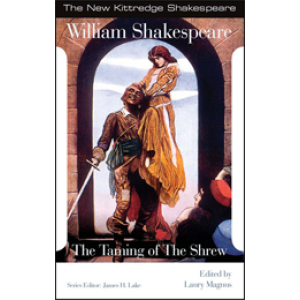
The Taming of the Shrew"Laury Magnus' edition of The Taming of the Shrew is much more than a revision of Kittredge. Her splendid introduction and appendices are sensitive to the play’s language and its paradoxical nuances of gender, and she understands that the play is, after all, a love story. Her explanatory notes are excellent, but most impressive and original is her emphasis on film, theater, and television performance."
Learn More
—Maurice Charney, Emeritus, Rutgers University -
![]() The Second Part of King Henry the Fourth
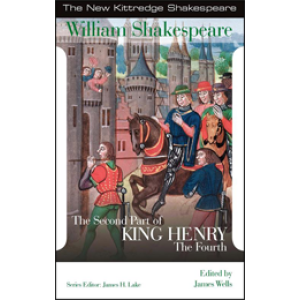
The Second Part of King Henry the Fourth"This is an exciting new edition, with a clear and lively introduction that succinctly captures the play's complexity and challenges. Wells' discussion of the play's relationship with Henry IV, Part One is especially thoughtful, and his attention to performance and film history is extremely valuable. The thorough and clear notes will be extremely helpful to students navigating Shakespeare's language for the first time, as well as for deepening the understanding of those who have some familiarity already. All in all, this is a valuable treatment of an often difficult play."
Learn More
—Tanya Pollard, Brooklyn College, CUNY -
![]() The First Part of King Henry the Fourth
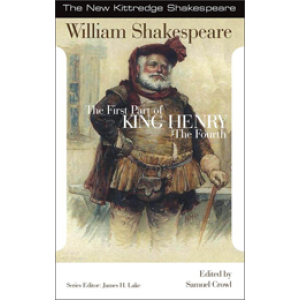
The First Part of King Henry the Fourth"Samuel Crowl's revision and updating of George Lyman Kittredge's edition of I Henry IV makes this useful text even more attractive to a contemporary audience of both general readers and students. Drawing on his extensive knowledge of and sensitivity to Shakespearean performance, Crowl provides a new Introduction,in addition to Kittredge's original, highlighting performance history, together with an essay on "How to Read The First Part of King Henry the Fourth as Performance," which pays particular attention to Orson Welles' Chimes at Midnight and two television productions of the play available on DVD. Crowl has lightly revised and extended Kittredge's annotations, and has added extensive performance notes where appropriate."
Learn More
—Michael Anderegg, University of North Dakota -
![]() The Jew of Malta
The Jew of Malta"A provocative edition, one which belongs on the shelves of student and scholar alike."
Learn More
—Martha Oberle, Frederick Community College, Maryland, in The Sixteenth Century Journal -
![]() Hamlet
Hamlet"Shakespeare scholars Bernice W. Kliman and James H. Lake have carried out the important task of not only bringing up to date the text of Hamlet as edited in the last century by the celebrated Shakespearean George Lyman Kittredge but also retaining its significant features. The editors' discerning analyses of performances by Mel Gibson, Kenneth Branah, Michael Almereyda, and Simon Russell Beale drive home the point that Hamlet today remains alive but restless and unpredictable. It exemplifies Ben Johnson's Shakespeare, who '. . . was not of an age, but for all time!'"
Learn More
—Kenneth Sprague Rothwell, (1921-2010), was Professor Emeritus, University of Vermont -
![]() Le Morte Darthur: The Seventh & Eighth Tales
Le Morte Darthur: The Seventh & Eighth Tales"P. J. C. Field, the world's preeminent Malory specialist, has wisely chosen to offer here Malory's seventh and eighth tales, recounting the decline and end of Camelot. The authoritative text is accompanied by indispensable notes and preceded by a remarkably thorough and learned—but never obscure—Introduction sufficient to prepare students and other readers to profit fully from the texts. This book is ideal for those coming to Malory for the first time and a distinct pleasure for those who already know him well."
Learn More
—Norris J. Lacy, E. E. Sparks Professor of French and Medieval Studies, Penn State University -
![]() The Merchant of Venice
The Merchant of Venice"Ken Rothwell does a splendid updating of Kittredge's Merchant of Venice with considerations of the play in performance. His essay on the play's stage history is lucid, his additions to Kittredge's notes are indicative of performance choices, and, as one would expect of the preeminent scholar of Shakespeare on film, his discussion of cinematic adaptations of Merchant is richly informative. This edition should prove useful to all levels of undergraduates."
Learn More
—James Bulman, Allegheny College -
![]() Romeo and Juliet
Romeo and Juliet"This splendid edition furnishes readers, students, and theater people alike with a marvelous set of tools for appreciating the many facets of Shakespeare's play: a freshly edited text from the authoritative 1599 quarto, trenchant explanatory notes, and–best of all–insightful performance notes detailing the various ways in which individual passages have been interpreted in important films and stage productions."
Learn More
—Eric Rasmussen, University of Nevada, Reno and co-editor of the RSC Shakespeare edition -
![]() The Faerie Queene, Book Six and the Mutabilitie Cantos
The Faerie Queene, Book Six and the Mutabilitie CantosBook Six and the incomplete Book Seven of The Faerie Queene are the last sections of the unfinished poem to have been published. They show Spenser inflecting his narrative with an ever more personal note, and becoming an ever more desperate and anxious author, worried that things were falling apart as Queen Elizabeth failed in health and the Irish crisis became ever more terrifying. The moral confusion and uncertainty that Calidore, the Knight of Courtesy, has to confront are symptomatic of the lack of control that Spenser saw everywhere around him. Yet, within such a troubling and disturbing work there are moments of great beauty and harmony, such as the famous dance of the Graces that Colin Clout, the rustic alter ego of the poet himself, conjures up with his pipe. Book Seven, the "Two Cantos of Mutabilitie," is among the finest of Spenser's poetic works, in which he explains the mythical origins of his world, as the gods debate on the hill opposite his Irish house. Whether order or chaos triumphs in the end has been the subject of most subsequent critical debate.
Learn More -
![]() Beowulf
Beowulf"Ringler has produced a really good translation of the poem, free of Seamus Heaney's quirks and Irishisms, keeping the rhythm and alliteration, and retaining a simplicity which demonstrates how otiose film effects are when the poem is both powerful and moving. The translation is accompanied by a marvelously straightforward introduction, eschewing all modish modern criticism and thus a useful corrective for those student-readers confused by the liberties taken by [Robert Zemeckis'] Beowulf and its writers. Tolkien would have been pleased by Ringler's version." —Carolyne Larrington, The Times Literary Supplement
"Although an audience of enamored nonspecialists embraced Heaney's version . . . other scholars gave only grudging respect to the poet whose 'Heaneywulf' often seemed to represent an Anglo-Saxon world re-created in the Irish poet's own image. Since 2002 new and revised translations have come and gone, none attracting as much attention as Heaney's. That should change with Ringler's new translation, and not just because scholars such as Tom Shippey, Frederick Rebsamen, and John Niles vouch for it. The proof is in the reading, whether one does so silently or aloud. In his comprehensive, insightful introduction and rhythmic replication of Old English poetry, Ringler offers the specialist what Heaney did not; this is a performative translation that re-creates the world of Beowulf as accurately as may be possible. Accessible and exciting for specialist and nonspecialist alike, this is the edition professors should be using to introduce the venerable poem to a new audience. Summing up: Essential." —A.P. Church, CHOICE
Learn More -
![]() Macbeth
Macbeth"Seventy years after their publication, George Lyman Kittredge's editions of Shakespeare remain exceptional for the combination of learning, acuity, wit, and clarity he brings to his notes on the plays. Annalisa Castaldo makes Kittredge's Macbeth even more useful for modern readers by skillfully streamlining Kittredge's annotations and adding helpful analyses of the play and its film productions. There is no better edition of Shakespeare for students, beginning or advanced."
Learn More
—Dr. James Wells -
![]() Antony and Cleopatra
Antony and Cleopatra"The New Kittredge Series is both a delight and a steal. Kittredge's textual authority, updated by eminent scholars sensitive to classroom needs and alert to staging choices, is once again available in these slim, elegant, inexpensive, user-friendly volumes. With lucid notes and incisive introductions geared especially to popular film versions, the series also offers an overview of both stage and film performances of each play. A must for any Shakespeare class."
Learn More
—Laury Magnus -
![]() Castle Rackrent
Castle RackrentSet in Ireland prior to its achieving legislative independence from Britain in 1782, Castle Rackrent tells the story of three generations of an estate-owning family as seen through the eyes—and as told in the voice—of their longtime servant, Thady Quirk, recorded and commented on by an anonymous Editor. This edition of Maria Edgeworth’s first novel is based on the 1832 edition, the last revised by her, and includes Susan Kubica Howard’s foot-of-the-page notes on the text of the memoir as well as on the notes and glosses the Editor offers "for the information of the ignorant English reader." Howard’s Introduction situates the novel in its political and historical context and suggests a reading of the novel as Edgeworth’s contribution to the discussion of the controversial Act of Union between Ireland and Britain that went into effect immediately after the novel’s publication in London in 1800.
Learn More -
![]() Middle English Poetry in Modern Verse
Middle English Poetry in Modern VerseThis rich and lively anthology offers a broad selection of Middle English poetry from about 1200 to 1500 C.E., including more than 150 secular and religious lyrics and nine complete or extracted longer works, all translated into Modern English verse that closely resembles the original forms. Five complete satires and narratives illustrate important conventions of the period: Athelston, a historical romance; The Cock and the Fox, a beast fable by Robert Henryson; Sir Orfeo, a Breton lai; Saint Erkenwald, an alliterative saint's life; and The Land of Cockayne, a fantasy. The book concludes with substantial excerpts from longer narratives such as Piers Plowman and Confessio Amantis.
Learn More -
![]() The Faerie Queene, Books Three and Four
The Faerie Queene, Books Three and Four"Stephens's introduction to books 3 and 4 [offers] a guide to approaching the poem's grammar and syntax, meter, and significant theme's as well as a list of possible questions for discussion based on issues addressed in recent criticism. . . . Stephens addresses the nature and content of Spenser's poem from a modern perspective backward, rather than from a medieval or early modern perspective forward—an orientation that may be more comfortable for less sophisticated readership and which helps to ground The Faerie Queene in a broader literary tradition."
Learn More
—Rachel E. Frier, Sixteenth Century Journal -
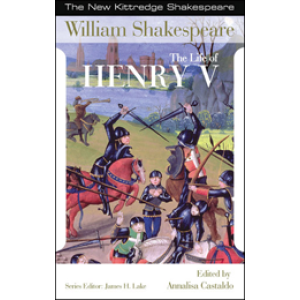
![]() The Life of Henry V
The Life of Henry V"The New Kittredge Series is both a delight and a steal. Kittredge's textual authority, updated by eminent scholars sensitive to classroom needs and alert to staging choices, is once again available in these slim, elegant, inexpensive, user-friendly volumes. With lucid notes and incisive introductions geared especially to popular film versions, the series also offers an overview of both stage and film performances of each play. A must for any Shakespeare class."
Learn More
—Dr. Laury Magnus