The Hackett Signature Editions Collection Featuring Premium Hardcovers of Hackett Classics - Learn More Here.

Classical Literature in Translation
-
![]() Argonautica
Argonautica"Anyone who's ever been fascinated by The Magnificent Seven or a Marvel Comics movie that brings together a team of great epic heroes for a noble cause will understand the archetype and the paradigm that animates Apollonius's version of the ancient myth of the Argo, in which an assemblage of highly charismatic pre-Trojan War heroes embarks on a daunting adventure. This new edition of the epic can play an invaluable role in any number of classes that involve ancient literature or that focus on heroic quests in literature of any period. Readers will be able to understand not only the story itself, but also the culture that produced it, and, further, the complicated and sometimes inconsistent values of heroism and nobility, which are both celebrated and challenged in Apollonius's great poem
Learn More
—Michael Calabrese, Professor of English, Cal State LA and translator of Piers Plowman: The A Version, revised edition (Catholic University of America Press) -
![]() Heroides
Heroides"An excellent piece of work. Lombardo and McClure have struck the right balance between literal and lyrical, formal and informal. Each of the letters has a distinct voice–something clear in the Latin but difficult to convey.
Learn More
"There are many small pleasures for the reader looking at the Latin (duplicated line-starts and -ends, verbal effects, etc.). Most are unobtrusive, which is all to the good. This translation is not designed to be a crib, though it wouldn’t be bad as one. More importantly, the poems read well in English. There are lots of glancing references to the tropes of elegy, but they won’t slow down the first-time reader of the poems. The translators have even made something of several of the puns (e.g. verbum/vela dare), an impressive feat.
"Welch's Introduction is perfectly pitched; it gives a lot of useful information in short compass, and it does so in a lively manner, with full attention to the scholarship but not so as the general reader would notice."
–Laurel Fulkerson, Professor Emerita of Classics, Florida State University -
![]() Persians
Persians"The musicality of Deborah Roberts' translation of Aeschylus' Persians, the earliest Greek tragedy that has come down to us, rivals the playwright's own astonishing lyricism. She crafts extended speeches by the drama's characters into captivating set-pieces of performance poetry. Roberts also replicates Herodotus' celebrated storytelling energy in her translation of the passages from his Histories included in this volume. In her Introduction, Roberts examines Aeschylus' drama and Herodotus' representations of Persian culture as crucial records of ancient Greek conceptions of otherness and perceptively appraises the Persians itself as a sober contemplation upon the shared human toll of political ambition and warfare’s traumas and grief, making this book urgently relevant to contemporary audiences."
Learn More
—James Bradley Wells, PhD, Edwin L. Minar Professor of Classical Studies, DePauw University -
![]() The Tale of Lucius: Or, The Ass (Onos)
The Tale of Lucius: Or, The Ass (Onos)Free PDF eBook, not available as a print book. Click the learn more link below to visit the title page and download a free PDF eBook.
An anonymous Greek reworking (doubtfully attributed to Lucian) of the lost, anonymous Greek Metamorphoseis (falsely attributed to Lucius of Patras). An American translation.
Learn MoreOut of stock -
![]() Aristophanes: Frogs (Meineck Edition)
Aristophanes: Frogs (Meineck Edition)Aristophanes's classic send-up of rivalry within the ultra-competitive world of fifth-century Athenian theatre wins a new lease on life in this fresh line-for-line translation by Peter Meineck. Premiered in 2021 by Aquila Theatre and accompanied here by Meineck’s notes and wide-ranging Introduction, this Frogs offers the best view yet of a high-stakes afterlife contest between two of Athens's late great playwrights. Both are undisputed masters of tragedy. But only one can win and return to save the city.
"Peter Meineck draws on his vast experience as both theatre producer and classical scholar in this lively and thoroughly contemporary translation of Aristophanes's rambunctious but heady Frogs. In highlighting Aristophanes's own concern for spectacle, stage action, and musicality, Meineck offers flexible guidance not only for modern producers of this comedy but also for readers eager to visualize an Aristophanic play in its original setting and to marvel at its enduring comic brilliance." —Ralph M. Rosen, Vartan Gregorian Professor of the Humanities and Classical Studies, University of Pennsylvania
Learn More -
![]() Lucian: Three Menippean Fantasies
Lucian: Three Menippean FantasiesA handful of fragments is all that remains of the writings of Menippus, the third-century BCE provocateur of the Greek Cynic movement. The Western literary tradition knows him through Lucian, the Greek satirist who lived and worked four hundred years later. Included in this book are Joel Relihan’s lively English translations of Lucian’s three reanimations of Menippus—fantastic narratives and comic dialogues set in heaven and hell: Menippus; or, The Consultation of the Corpses, Icaromenippus; or, A Man above the Clouds, and The Colloquies of the Corpses (Dialogues of the Dead).
“Professor Relihan’s translations of Lucian’s Menippus works are the best I know of in English. The notes, Introduction, and Afterword are models of concision and clarity. This volume will be enormously useful to anyone interested in Lucian, Menippus, or ‘Menippean satire’.” —R. Bracht Branham, Emory University
Learn More -
![]() Aeneid (Krisak Edition)
Aeneid (Krisak Edition)Rising to the challenge of rendering the poem's Latin hexameters by adopting English iambic ones, Len Krisak's Aeneid doubles down on the English poetic tradition by also featuring rhyme. In Krisak's hands, these devices provide not only a superb kind of music but the snap and power of an epic adventure that glories in what only formal poetry can do. Enhanced by an Introduction and an extensive set of notes by Christopher M. McDonough, this Aeneid works as story, voice, and verse.
"Virgil’s Aeneid, though central to the Western canon, is also one of the most difficult to tackle for the translator, with its knotty syntax, its famously 'pious' protagonist, and its slippery ambivalence toward questions of truth and power. In this fresh translation, Len Krisak not only boldly meets Virgil line-for-line, but in a hexameter that answers the original meter, all while hewing to straightforward English with a weather eye on the Latin. The six-beat line has a reputation in English for dragging, but Krisak's hexameters drive along briskly. His choice to rhyme throughout, sometimes chiming ingeniously and sometimes with subtler off-rhyme effects, brings home that we are reading not only an epic narrative, but a verse performance. This work, concerned with human displacement in the aftermath of a prolonged war, with its themes of personal responsibility, duty, and leadership, and imbued with anxiety about the direction of a nation, could not be more topical." —A. E. Stallings
Learn More -
![]() Odes: With Carmen Saeculare
Odes: With Carmen Saeculare"Yet again, Stanley Lombardo has produced a superb translation, this time of the Odes of Horace. The greatest virtue of his translation is that he represents the stanzas of Horace's lyric stanzas with his own poetic version, closely hewing to the stanzas of the Horatian original. The translation, with the Latin text facing—the first time he has given us the original language in a translation from classical antiquity—will instantly become the go-to text for courses in translation and will also be a resource for anyone interested in Rome’s greatest lyric poet." —Richard F. Thomas, George Martin Lane Professor of the Classics, Harvard University
Learn More -
![]() Anthology of Classical Myth (Second Edition)
Anthology of Classical Myth (Second Edition)This new edition of Anthology of Classical Myth offers selections from key Near Eastern texts—the Babylonian Epic of Gilgamesh, Epic of Creation (Enuma Elish), and Atrahasis; the Hittite Song of Emergence; and the flood story from the book of Genesis—thereby enabling students to explore the many similarities between ancient Greek and Mesopotamian mythology and enhancing its reputation as the best and most complete collection of its kind. Click here to see the full Table of Contents (PDF) for Anthology of Classical Myth (Second Edition).
Learn More -
![]() Ion, Helen, Orestes"Diane Arnson Svarlien's lively and accessible translations give an excellent sense of Euripides' poetic resources, from his artful blend of conversational idiom and high style, to his powerful displays of rhetoric and emotion, to the expressive rhythms and images of his songs. They are sure to delight readers and listeners alike. Moreover, they have been shaped by judicious use of the best and latest scholarship. The plays in this volume will surprise readers used to tragedy on the Aristotelian pattern and stimulate reflection about what tragedy is and what it is for."
Ion, Helen, Orestes"Diane Arnson Svarlien's lively and accessible translations give an excellent sense of Euripides' poetic resources, from his artful blend of conversational idiom and high style, to his powerful displays of rhetoric and emotion, to the expressive rhythms and images of his songs. They are sure to delight readers and listeners alike. Moreover, they have been shaped by judicious use of the best and latest scholarship. The plays in this volume will surprise readers used to tragedy on the Aristotelian pattern and stimulate reflection about what tragedy is and what it is for."
—John Gibert, Department of Classics, University of Colorado, Boulder Learn More -
![]() Three Other Theban Plays
Three Other Theban PlaysThough now associated mainly with Sophocles’ Theban Plays and Euripides’ Bacchae, the theme of Thebes and its royalty was a favorite of ancient Greek poets, one explored in a now lost epic cycle, as well as several other surviving tragedies. With a rich Introduction that sets three of these plays within the larger contexts of Theban legend and of Greek tragedy in performance, Cecelia Eaton Luschnig’s annotated translation of Aeschylus’ Seven Against Thebes, Euripides’ Suppliants, and Euripides’ Phoenician Women offers a brilliant constellation of less familiar Theban plays—those dealing with the war between Oedipus’ sons, its casualties, and survivors.
Learn More -
![]() Complete Poems and Fragments
Complete Poems and Fragments"In this expanded edition of his distinguished Sappho: Poems and Fragments (2002), Stanley Lombardo offers over 100 fragments not included in the original edition, as well as the new poems discovered in 2004 and 2014. His translation of this latter material yields fresh insights into Sappho’s representations of old age, two of her brothers, and her special relationship with Aphrodite. Pamela Gordon’s engaging, balanced, and informative Introduction has been revised to incorporate discussion of the new fragments, which subtly alter our previous understanding of the archaic poet’s corpus. Complete Poems and Fragments also offers a useful updated bibliography, as well as a section on ‘Elegiac Sappho’ that presents the reception of the Lesbian poet in later Greek and Latin elegiac poems. A wonderful find for any Greekless reader searching for a complete and up-to-date Sappho."
Learn More
—Patricia A. Rosenmeyer, Department of Classics, University of Wisconsin-Madison -
![]() Achilleid
Achilleid"One of the most entertaining short narratives of all time, the Achilleid is a stand-alone work of compelling contemporary interest that moves with great rapidity and clarity. Its compact narrative, which encompasses a brutish childhood, an overprotective mother, temporary gender bending, sexual violence, and a final coming to manhood with the promise of future military prowess, may be unparalleled in a single narrative of such brevity. . . . Until now, however, it has been virtually impossible to get a sense of the work if one did not know Latin—recent translations notwithstanding. Stanley Lombardo’s translation of the Achilleid is a dream: it’s sound, enthralling, and will fully engage readers with this enticing, perplexing, at times distressing, but ultimately rewarding work."
Learn More
—Marjorie Curry Woods, The University of Texas at Austin -
![]() Civil War
Civil War"Brian Walters has given us what too few translators of classical poetry do—an authorial presence. Here is Lucan himself in all his drastic modes—everything from his enraged indignation to his paradoxical aphorisms—recreating the ruptured Neronian world he lived in as he recounts the nefarious civil war that destroyed the Roman Republic."
Learn More
—Stanley Lombardo, University of Kansas -
![]() Aristophanes and Menander: Three Comedies
Aristophanes and Menander: Three Comedies"No one, but no one, ever translated ancient comedy like Douglass Parker, and his death left a chasm in the landscape. This posthumous publication of three of Greek theatre's wildest plays, edited and presented by a scholar as eminent and learned as Timothy Moore, is not just something to welcome, it is something to celebrate."
Learn More
—William Levitan, Grand Valley State University -
![]() Philoctetes
Philoctetes"Peter Meineck has given us a superbly vivid rendering of the play, informed throughout by his practical experience in the theater. His is a Philoctetes that is supremely alive, from start to finish. . . . [I]deal for classroom use. . . . accompanied by a new and thoughtful introduction from philosopher and classicist Paul Woodruff. Woodruff anchors the play in the complex web of fears and anxieties of 409 BCE, as both Sophocles' life and Athens' imperial heyday drew to a close. . . . [A]n exceptionally fine work of translation and scholarship that will go far toward demolishing dismissals of the play as inaccessible or unengaging for the modern reader. Sophocles, Meineck and Woodruff eloquently remind us, speaks to every age, not least our own."
Learn More
—Thomas R. Keith, Loyola University Chicago in CJ-Online -
![]() The Orestes Plays
The Orestes PlaysFeaturing Cecelia Eaton Luschnig's annotated verse translations of Euripides' Electra, Iphigenia among the Tauri, and Orestes, this volume offers an ideal avenue for exploring the playwright's innovative treatment of both traditional and non-traditional stories concerning a central, fascinating member of the famous House of Atreus.
Learn More -
![]() Satires
Satires"This work will be a welcome addition to course reading lists, as it does justice to Horace's misleadingly simple verse. Svarlien’s rhythmic lines go down lightly and easily—as he renders Horace's phrase, he 'writes like people talk,' yet it is a talk that jars and provokes. Mankin's concise and highly readable notes will be as useful to scholars as to new readers of Horace: they are packed with cultural background, stylistic commentary, useful cross-references, and appealing suggestions on interpretation." —Catherine Keane, Department of Classics, Washington University in St. Louis
Learn More -
![]() Prometheus Bound
Prometheus Bound“This is the best Prometheus Bound in English. Deborah Roberts’ translation is accurate, readable, and true to the original in idiom, imagery, and the combination of a high style with occasional colloquialism. The informative notes and perceptive Introduction will help readers to experience the play with heightened pleasure and understanding.” —Seth L. Schein, Professor of Comparative Literature, University of California, Davis
"This is an outstandingly useful edition of Prometheus Bound. The translation is both faithful and graceful, and the introduction to this difficult play is a model of clarity, intelligence, and a profound familiarity with the workings of Greek myth, Greek literature, and literature in general." —Rachel Hadas, Department of English, Rutgers University
"The language is rich and poetic without being overly stylized. The result is a beautiful rendition of the tragic language. . . . The Introduction provides everything one would want and expect to find for this play." —Kathryn Mattison, McMaster University, in Mouseion
Learn More -
![]() Andromache, Hecuba, Trojan Women
Andromache, Hecuba, Trojan WomenDiane Arnson Svarlien’s translation of Euripides’ Andromache, Hecuba, and Trojan Women exhibits the same scholarly and poetic standards that have won praise for her Alcestis, Medea, Hippolytus. Ruth Scodel’s Introduction examines the cultural and political context in which Euripides wrote, and provides analysis of the themes, structure, and characters of the plays included. Her notes offer expert guidance to readers encountering these works for the first time.
Includes the unabridged text of Diane Arnson Svarlien's Hecuba, a translation featured in Patrick Wang's critically acclaimed film, A Bread Factory.
"Wang tracks a scene from a Bread Factory production of Hecuba from an uncertain rehearsal, to a breakthrough for its actors, to a searching discussion of the text and the characters, to a final performance so thrilling that I found myself wishing, while watching, that Wang would just shoot the whole play. Happily, he lets this Hecuba keep going." —Alan Scherstuhl, LA Weekly
To see Patrick Wang's article "Hecuba: A Film Record" in Didaskalia, click here. To see clips from the Arnson Svarlien Hecuba featured in A Bread Factory, click here.
Learn More -
![]() The Essential Metamorphoses
The Essential MetamorphosesThe Essential Metamorphoses, Stanley Lombardo’s abridgment of his translation of Ovid’s Metamorphoses, preserves the epic frame of the poem as a whole while offering the best-known tales in a rendering remarkable for its clarity, wit, and vigor. While making no pretense of offering an experience comparable to that of reading the whole of Ovid’s self-styled history “from the world’s first origins down to my own time,” this practical and judicious selection of myths at the heart of Roman mythology and literature yet manages to relate many of the most fascinating episodes in that world-historical march toward the Age of Augustus—and is accompanied by an Introduction that deftly sets them in their cosmological, theological, and Augustan contexts.
Learn More -
![]() Electra, Phoenician Women, Bacchae, & Iphigenia at Aulis
Electra, Phoenician Women, Bacchae, & Iphigenia at AulisThe four late plays of Euripides collected here, in beautifully crafted translations by Cecelia Eaton Luschnig and Paul Woodruff, offer a faithful and dynamic representation of the playwright’s mature vision.
Learn More -
![]() Metamorphoses (Lombardo Edition)
Metamorphoses (Lombardo Edition)"Stanley Lombardo successfully matches Ovid’s human drama, imaginative brio, and irresistible momentum; and Ralph Johnson’s superb Introduction to Ovid's 'narratological paradise' is a bonus to this new and vigorous translation that should not be missed. Together, Introduction and text bring out the delightful unpredictability of Ovid’s 'history of the world' down to his times."
—Elaine Fantham, Giger Professor of Latin, Emerita, Princeton University"Lombardo’s translation is the most readable I’ve seen. . . . Its language is modern, accessible, and unpretentious. . . . I can imagine reading all the way through this version with students. I also admire the catalog of transformations . . . and, as usual, an Introduction by Ralph Johnson is worth the price of the book." —Margaret Musgrove, University of Central Oklahoma
Learn More -
![]() Odysseus at Troy
Odysseus at TroyOdysseus at Troy is centered on the mythological Greek warrior, Odysseus, hero of the Trojan War. This book contains three plays: Sophocles' Ajax, Euripides' Hecuba, and Euripides' Trojan Women. The plays are complete, with notes and introductions for each. An additional introduction to the volume gives background on this popular theme, and on Ajax, one of the most written-about hero in Greek literature.
Learn More -
![]() Two Novels from Ancient Greece
Two Novels from Ancient Greece"Since [Chariton's Callirhoe and Xenophon of Ephesos' An Ephesian Story] first found their way into the mainstream of Classics instruction twenty years ago, the need for new translations has become obvious, not only because of the textual and theoretical advances made in the interim, but because of demand for examining them in broader contexts. For both surveys of Greek and Roman literature and courses on the history of prose fiction, that demand has now been elegantly met. Trzaskoma's translation, based on greatly improved Greek texts, shows a sophisticated appreciation of the range in vocabulary and tone within Chariton, and similarities and differences in style between Chariton and Xenophon become easily apparent. . . . The Chariton and Xenophon I thought I knew have become much richer and more compelling texts. Any student of the ancient novel, and any teacher wanting to create more students of the ancient novel, needs to read this book."
Learn More
—Joel C. Relihan, Professor of Classics, Wheaton College (Norton, Mass.) -
![]() The Tale of Cupid and Psyche
The Tale of Cupid and Psyche"Joel Relihan's playful and exuberant translation of Apuleius' Golden Ass has already won admiration for its ability to give an English-reading audience some sense of what it's like to experience this often astonishing writer in the original Latin. By presenting The Tale of Cupid and Psyche with its narrative frame and by supplementing it with key passages from other writers, he here provides the reader with the materials needed for an informed and complex engagement with this text; his carefully nuanced 'Afterthoughts' enrich that process further. This volume will appeal to anyone with interests in myth, religion, and folklore, and will surely find its place in a wide range of courses."
Learn More
—James B. Rives, University of North Carolina at Chapel Hill -
![]() The Electra Plays
The Electra Plays"Once again, Peter Meineck and Paul Woodruff team up (this time with Cecelia Eaton Luschnig) to produce a thoroughly engaging text with lively translations that prove to be of great value to the college classroom. . . . The clarity of the translations, the unburdensome thoroughness of the introduction, and the judicious selection of footnotes, however, combine to allow students both within and outside the pertinent disciplines to appreciate how The Electra Plays speak directly to the world."
Learn More
—Mitchell M. Harris, Augustana College -
![]() Theogony & Works and Days (Caldwell & Nelson Edition)
Theogony & Works and Days (Caldwell & Nelson Edition)This edition includes an annotated translation, by Richard Caldwell, of Hesiod’s Theogony together with annotated translation, by Stephanie Nelson, of Hesiod’s Works & Days. Introductions by the translators are also included, as is an essay by Caldwell entitled “The Psychology of the Succession Myth."
Learn More -
![]() Electra
ElectraThis is an English translation of Sophocles' tragedy of Electra, and the vengeance that she and her brother Orestes take on their mother and step father for the murder of their father. This edition also includes an "afterlife" essay that discusses adaptations of the play, as well as touches on other ways Electra has had influence (Jung's identification of the Electra Complex, O'Neill's Mourning Becomes Electra). Focus Classical Library provides close translations with notes and essays to provide access to understanding Greek culture.
Learn More -
![]() Frogs (Henderson Edition)
Frogs (Henderson Edition)"Overall . . . I find this translation of the Frogs to be entertaining and very readable. Furthermore, Henderson's comprehensive introduction makes this translation quite useful for general readers or students at any level." —Erin K. Moodie, Bryn Mawr Classical Review
Learn More -
![]() Medea (Svarlien Edition)
Medea (Svarlien Edition)"This is the Medea we have been waiting for. It offers clarity without banality, eloquence without pretension, meter without doggerel, accuracy without clumsiness. No English Medea can ever be Euripides', but this is as close as anyone has come so far, and a good deal closer than I thought anyone would ever come. Arnson-Svarlien has shown herself exceedingly skillful in making Euripides sound Euripidean." —David M. Schaps, Bryn Mawr Classical Review
"Fluid, lively, and accurate!" —Amy Vail, Department of Classics, Baylor University
Learn More -
![]() Plautus: Casina, Amphitryon, Captivi, & Pseudolus
Plautus: Casina, Amphitryon, Captivi, & Pseudolus"Christenson has offered readers a useful and informative edition of four Plautine plays in neutral, accessible English that, unlike some recent Plautus translations, reaches out to a wide modern audience, both classicist and general, both in Anglophone countries and elsewhere in the world. Within the range of Plautus translations as currently available, this is certainly a most welcome contribution. Christenson's thematical focus on some of Plautus' more serious plays, in which he seems almost like a social critic, is interesting and provides food for thought."
Learn More
—Vincent Hunink, in Bryn Mawr Classical Review -
![]() Sophocles: Four Tragedies
Sophocles: Four TragediesMeineck and Woodruff's new annotated translations of Sophocles' Ajax, Women of Trachis, Electra, and Philoctetes combine the same standards of accuracy, concision, clarity, and powerful speech that have so often made their Theban Plays a source of epiphany in the classroom and of understanding in the theatre. Woodruff's Introduction offers a brisk and stimulating discussion of central themes in Sophoclean drama, the life of the playwright, staging issues, and each of the four featured plays.
Learn More -
![]() Alcestis, Medea, Hippolytus
Alcestis, Medea, HippolytusThis new volume of three of Euripides' most celebrated plays offers graceful, economical, metrical translations that convey the wide range of effects of the playwright's verse, from the idiomatic speech of its dialogue to the high formality of its choral odes.
"Many scholars translate the works of Euripides as they should be, but Diane Arnson Svarlien translates them as they are. . . . Arnson Svarlien shows admirable modesty and restraint in avoiding . . . pitfalls, and makes choices that reveal the meaning of the text she is translating with the least imposition of her own personality. The ambiguity of Euripides is transmitted to us but not imposed on us by [her] translation. . . . The translations are both readable and playable." —Edmond Chibeau, New England Theatre Journal
Learn More -
![]() The Golden Ass
The Golden Ass"This is easily the best English translation of The Golden Ass. I find that undergraduates with little or no knowledge of classical literature or the Greco-Roman world can readily read and enjoy it—as accessible as Graves or Ruden, but much more true to Apuleius's text and sensibility. Relihan's introduction is a great distillation of scholarly commentary—superb in all aspects." —Robin Walz, University of Alaska Southeast
"Relihan is an American Euphues. I like everything about this edition from the title page to the index. The translation is magnificent." —Stanley Lombardo, University of Kansas
Learn More -
![]() The Essential Odyssey
The Essential OdysseyThis generous abridgment of Stanley Lombardo’s translation of the Odyssey offers more than half of the epic, including all of its best-known episodes and finest poetry, while providing concise summaries for omitted books and passages. Sheila Murnaghan’s Introduction, a shortened version of her essay for the unabridged edition, is ideal for readers new to this remarkable tale of the homecoming of Odysseus.
Learn More -
![]() Apollodorus' Library and Hyginus' Fabulae
Apollodorus' Library and Hyginus' Fabulae"To refer to this volume as just a translation is misleading, because Smith and Trzaskoma have provided much more, most notably the best short introduction to ancient mythography—and these particular authors—available in English. . . . The translations themselves are clear and accurate. [An] admirable volume. Smith and Trzaskoma are to be commended."
Learn More
—Kris Fletcher, Bryn Mawr Classical Review -
![]() The Essential Aeneid
The Essential AeneidStanley Lombardo's deft abridgment of his 2005 translation of the Aeneid preserves the arc and weight of Virgil's epic by presenting major books in their entirety and abridged books in extended passages seamlessly fitted together with narrative bridges. W. R. Johnson's Introduction, a shortened version of his masterly Introduction to that translation, will be welcomed by both beginning and seasoned students of the Aeneid, and by students of Roman history, classical mythology, and Western civilization.
Learn More -
![]() Apologies
Apologies"Kremer's is an attractive text because of its combination of simplicity and strong delivery, and this is true regarding his translation and his interpretive essay alike. He has striven for a scrupulous accuracy in his translation, and he has achieved this without sacrificing readability or neglecting the distinctive tone of Plato and Xenophon."
Learn More
—Norma Thompson, Yale University -
![]() Hecuba
HecubaEuripides Hecuba is one of the few tragedies that evoke a sense of utter desolation and destruction in the audience. The drama focuses on the status of women, those who are out of power and at the margins of society, by enacting the sufferings of Hecuba. With the city of Troy fallen, Hecuba and Polyxena, her daughter, are enslaved to Agamemnon. Hecuba is despondent with the news that Polyxena is chosen to be sacrificed at the tomb of Achilles. After the sacrifice, the body of her son Polydorus, already a ghost at the start of the drama, is discovered. Polymestor, a king in Thrace who Hecuba sent Polydorus to for safety reasons, murdered Polydorus for his gold. With the tacit complicity of Agamemnon, Hecuba plots her revenge against Polymestor. What transpires next has lasting implications for all involved, including a dramatic trial scene and Hecubas ultimate metamorphosis.
Learn More -
![]() Homeric Hymns (Ruden Edition)
Homeric Hymns (Ruden Edition)"Sarah Ruden's translation is clear, lean, intelligent, and delightfully readable. The notes provide guidance without encumbering the text. This will be marvelous for classroom use, for reading aloud, or simply for reading for pleasure."
Learn More
—Pamela Gordon, Department of Classics, University of Kansas -
![]() The Trojan Women
The Trojan WomenEnglish translation, with introduction, notes and appendices. The Trojan Women is a play on the consequences of war and the fate of those defeated in war and their victors.
Learn More -
![]() Aeneid (Lombardo Edition)
Aeneid (Lombardo Edition)"Crisp, idiomatic, and precise, this is a translation for our era. The list of further reading, grounded in the writings of W.R. Johnson (who also wrote the Introduction) and Michael C. J. Putnam, suggests the context that informs the translation: here, as the translator says in the Preface, you will find an Aeneid that works more in the shadows than in the light. . . . This translation would be excellent for classroom use: not only would it incite fascinating discussions about issues of war and empire, but it also reads well aloud. . . . Together with Johnson's Introduction, this volume offers the Aeneid in terms that will resonate strongly with the general reader of today." —Sarah Spence, New England Classical Journal
"Adapting words of the ancient critic Longinus, [Lombardo] refers to the intense light of noon of the Iliad, the magical glow of the setting sun in the Odyssey, and the chiaroscuro of the Aeneid, a darkness visible. This latter phrase is the title of a famous interpretation of the Aeneid by W. R. Johnson, who contributes a splendid essay to the translation. Whether recited or read, the present volume stands as another fine performance on Lombardo's part. Summing up: Highly recommended."
—C. Fantazzi, CHOICE"Lombardo...tends to let Virgil be Virgil, and so avoids imposing unwarranted interpretation on the unwary reader. . . . [W.R. Johnson's] introduction is masterful and illuminating." —Hayden Pelliccia, The New York Review of Books
Learn More -
![]() Metamorphoses (Ambrose Edition)
Metamorphoses (Ambrose Edition)This complete verse translation of Ovid's classical work is illustrated with extensive notes, an index, and glossary. To help the reader contend with Ovid's frequent leaps both ahead and back in time, the principle episodes are listed at the beginning of each book and the subsections and digressions marked with indentations. Some footnotes also refer to mythological material Ovid has derived from Greek epic or drama or, occasionally, from later sources. Specific authors referred to in these notes are briefly identified in the index and glossary.
Learn More -
![]() Aeneid, A Prose Translation
Aeneid, A Prose TranslationAn exciting prose translation of the epic poem, beautifully illustrated by Merle Mianelli Poulton, with all the right pedagogical apparatus to make reading this important work a joy for any modern college or high school student. The text is complete with notes, introductory essay, glossary, and an appendix detailing the tabulation of the gods.
Learn More -
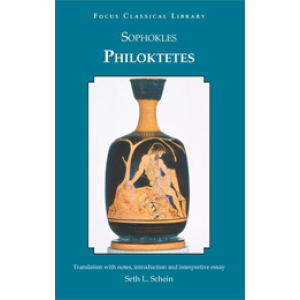
![]() Philoktetes
Philoktetes"Seth Schein's new translation of the Philoctetes will serve as a useful text for upper-year classical literature courses in translation. As is typical of the Focus Classical Library series, Schein's translation aims to give a faithful rendering of the Greek that is at the same time readable, if not poetic. It also situates the work in its historical context and generally provides the supplementary material required for readers new to Attic tragedy. . . . Given that it provides more contextual information and interpretive detail than the average translation, and that the translation itself strives for greater fidelity to the original, Schein's work will be most welcome in upper-year translation courses, where it will encourage students to develop a more detailed and subtle understanding of the play."
Learn More
—Brad Levett, Carleton University -
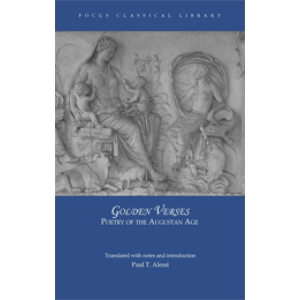
![]() Golden Verses: Poetry of the Augustan Age
Golden Verses: Poetry of the Augustan AgeAn anthology containing fresh and rhythmic translations of the great poets from the Augustan period, Golden Verses covers a broad range of verse with introduction, maps, chronology, glossary, bibliography and notes. Alessi's text is designed specifically for the college market, providing students with access to the thought and context at the roots of our culture. Designed to be read in conjunction with major works of the Augustan Age—Ovid's Metamorphosis and Vergil's Aeneid.
Learn More -
![]() Acharnians (Second Edition)
Acharnians (Second Edition)"Henderson has a real gift for capturing Aristophanes' voice, and does not hesitate to leap totally over the top, just like his author."
Learn More
—New England Classical Journal -
![]() Theban Plays (Woodruff & Meineck Edition)
Theban Plays (Woodruff & Meineck Edition)This volume offers the fruits of Peter Meineck and Paul Woodruff's dynamic collaboration on the plays of Sophocles' Theban cycle, presenting the translators' Oedipus Tyrannus (2000) along with Woodruff's Antigone (2001) and a muscular new Oedipus at Colonus by Meineck. Grippingly readable, all three translations combine fidelity to the Greek with concision, clarity, and powerful, hard-edged speech. Each play features foot-of-the-page notes, stage directions, and line numbers to the Greek. Woodruff's Introduction discusses the playwright, Athenian theatre and performance, the composition of the plays, and the plots and characters of each; it also offers thoughtful reflections on major critical interpretations of these plays.
Learn More -
![]() On the War for Greek Freedom
On the War for Greek FreedomDesigned for students with little or no background in ancient Greek language, history, and culture, this new abridgment presents those selections that comprise Herodotus’ historical narrative. These are meticulously annotated, and supplemented with a chronology of the Archaic Age, Historical Epilogue, glossary of main characters and places, index of proper names, and maps.
Learn More